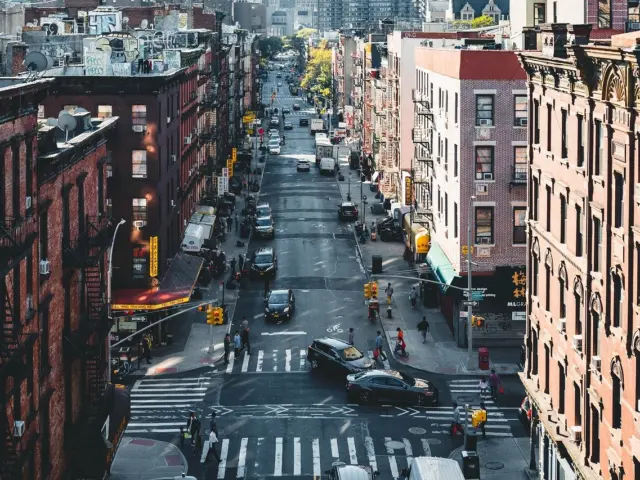
A missed call from 9172132810 tells you very little by itself: the 917 code belongs to New York City, yet the number does not reveal who dialled it or why, and no owner is confirmed here. What you can do is read the number correctly, compare it with your own records and decide how much attention it deserves.
| What the number is | A ten-digit North American number, written 9172132810 |
| Other ways to write it | (917) 213-2810, 917-213-2810, +1 917 213 2810 |
| Prefix meaning | 917 is associated with New York City |
| What it cannot show | The caller’s name, employer or purpose |
| Typical confusion | Assuming a local-looking code means a local caller |
| Next step | Check your call history, then search the digits in quotes |
What 9172132810 actually is
People sometimes see a bare string such as 9172132810 and wonder whether it is a code, an account number or a phone number. Ten digits in this arrangement is a standard North American phone number. Written in the long form, +1 917 213 2810, the “+1” is the country code shared by the United States, Canada and a number of Caribbean nations.
The remaining digits split into three parts: 917 is the area code, 213 is the central-office or exchange portion, and 2810 identifies the individual line. None of those groups contains a name. Phone numbers are labels for routing, not for identity.
Why 9172132810 may look more local than it is
Many readers assume that a 917 call comes from someone standing in New York. That assumption is the most common source of confusion with a number like 9172132810.
Mobile numbers stay with their owners when they move house, so a 917 line can be in use in Texas or Tokyo. Companies that use internet calling can also present any number they have been allocated, and some callers imitate nearby codes on purpose because people are more likely to pick up. Nothing in 917 or in 9172132810 can settle the matter in either direction.
How 9172132810 differs from a toll-free number
A second mix-up is between ordinary numbers and toll-free ones. Codes such as 800, 833, 844, 855, 866, 877 and 888 are toll-free: the person calling pays nothing, and the owner pays instead. A 917 number is not in that group. It is a geographic code, so a call to it can carry normal charges depending on your plan.
The practical effect is small but real. A toll-free number is typical of businesses and organisations that want customers to reach them. A geographic number can belong to a company, a sole trader or a private person with a mobile phone, and the digits alone do not say which.
Does a voicemail or text from 9172132810 change the picture?
It can, but only through what the message says. A message that names an organisation, gives a reason and offers no pressure is a lead you can check, though through the organisation’s own published contact details, never by tapping a link or returning a call from the message alone.
A message that is vague, urgent or asks for money, codes or personal details deserves the opposite treatment. Note it, do not reply, and move to blocking if it repeats. Texts are especially easy to fake because the sender line can be altered, so judge them by the request they make.
The 213 inside 9172132810 is not an area code
One more trap catches careful readers. The middle three digits of 9172132810 happen to be 213, which is also the area code of central Los Angeles. In this position, though, they are only the exchange, the block of numbers that comes after the area code. The same digits mean something entirely different when they lead a number.
Nobody should conclude that the call has anything to do with California. If an online page ties 9172132810 to Los Angeles because of those three digits, it has misread the format. Position decides meaning: the first three digits name the area, and the next three, on their own, name nothing a member of the public can usefully interpret.
The same caution applies to the final four digits. People sometimes read patterns into repeated or round numbers, suspecting a “vanity” line or a spoofed one. Pattern-spotting of that kind feels persuasive and proves nothing.
Searching for 9172132810 without being misled
Search the number as 9172132810, as 917-213-2810 and as (917) 213-2810, each in quotation marks, because different pages format digits differently. Then read the results critically:
- A page that lists the number as a business contact is only a clue. Phone numbers are reassigned, and old listings stay online long after the line has changed hands.
- Reader comments describe what happened to someone else, on some earlier day, and may refer to a different caller who once used the same line.
- Sites that charge for the “owner” of a number frequently rely on the same recycled data you can already see for free.
An empty results page is a normal outcome. It is neither comforting nor alarming.
If you want a fuller picture, put your own timeline together: when the first contact arrived, whether more followed, and whether anything you did that week could explain it, such as filling in an online form, booking a service or ordering a parcel. A call that lines up with your activity is easier to explain, and one that lines up with nothing is useful information too.
What to do if the contact from 9172132810 felt wrong
Trust your reaction and slow down. Do not return the call from the number shown, and do not press keys to be removed from a list. If the caller claimed to represent a bank, a government agency, a courier or a technology firm, hang up and find that organisation’s number on its official website, a bill or the back of your card.
Block the number from your phone’s call history: on an iPhone through the info icon beside the entry, on Android by holding the entry and choosing Block. If any money or details changed hands, tell your bank immediately, change affected passwords and file a report with the Federal Trade Commission in the United States or the Canadian Anti-Fraud Centre in Canada. Reports built from specific dates and wording help investigators spot patterns.
Questions people ask about 9172132810
Is it possible to learn who owns 9172132810 from this page?
No. No owner is confirmed here, and inventing one would help nobody. Only a contact that identifies itself and can be verified independently will answer that.
Does a New York code mean the call came from New York?
Not necessarily. The code shows where the line was first assigned. Mobile portability and internet calling mean the caller may be almost anywhere.
Should I be worried about one missed call?
A single unexplained missed call is common and usually harmless in itself. The worry begins only when the follow-up asks for money, codes or personal details.