Wondering how to upcycle old clothes without sewing skills? Start with a tired T-shirt or jeans, pick one simple change such as cutting, patching or dyeing, and practise on something you won’t miss.
| Item | Value |
|---|---|
| Clothing, footwear and household textiles bought per EU person, 2022 | 19 kg |
| Of that, clothing | 8 kg |
| Textile waste generated by EU Member States, 2022 | about 6.94 million tonnes |
| Textile waste per EU person, 2022 | 16 kg |
| Household textile waste not collected separately, 2022 | 85% |
These figures come from the European Environment Agency’s press release. Figures can change, so check the source before you rely on them.
Upcycling means turning something you no longer wear into something you will use, often better than the original. It sits alongside good garment upkeep, which our guide on how to care for clothes covers.
Why upcycle clothes at all?
The numbers above show the scale of the problem. In 2022 the average EU citizen bought 19 kg of clothing, footwear and household textiles, and the EU generated about 6.94 million tonnes of textile waste.
According to the EEA, separate collection captured only a minority of household textile waste in 2022: 85% entered disposal streams rather than reuse or recycling.
One old shirt turned into a bag will not fix that. But each garment you keep in use is one fewer to throw away, and it costs you very little.
What to check before you cut anything
A few minutes of preparation saves most beginner mistakes. Work through this list first:
- Wash the garment, so you cut and sew clean fabric.
- Look at the care label for fibre content. Cotton, linen and wool behave very differently from stretchy synthetics.
- Decide what is still good: strong seams, intact fabric, usable buttons, zips and pockets.
- Choose a project that matches the fabric. Woven cotton suits bags and patches; knit jersey suits headbands and cords.
- Keep every offcut in a box. Small scraps become patches, stuffing or cleaning cloths later.
If the item is washed often, remember that synthetic fabrics shed fibres. Our piece on how to reduce microplastics when washing clothes explains how to limit that.
No-sew ideas you can finish in an afternoon
You need only scissors for these. They are the best place to begin because mistakes cost almost nothing.
- T-shirt tote bag: cut off the sleeves, widen the neckline, then cut a fringe along the bottom hem and knot the strips together in pairs to close it.
- Jersey yarn: cut a T-shirt into one long continuous strip, stretch it so it curls, and use it for braids, plant hangers or rugs.
- Cleaning cloths: cut worn cotton into squares. They replace disposable wipes and cost nothing.
- Hair ties and headbands: braid or twist jersey strips and knot the ends.
- Cropped or sleeveless tops: jersey doesn’t fray, so a clean cut is usually enough.
- Cut-off shorts: trim worn jeans to your length and leave the edge raw for a frayed look.
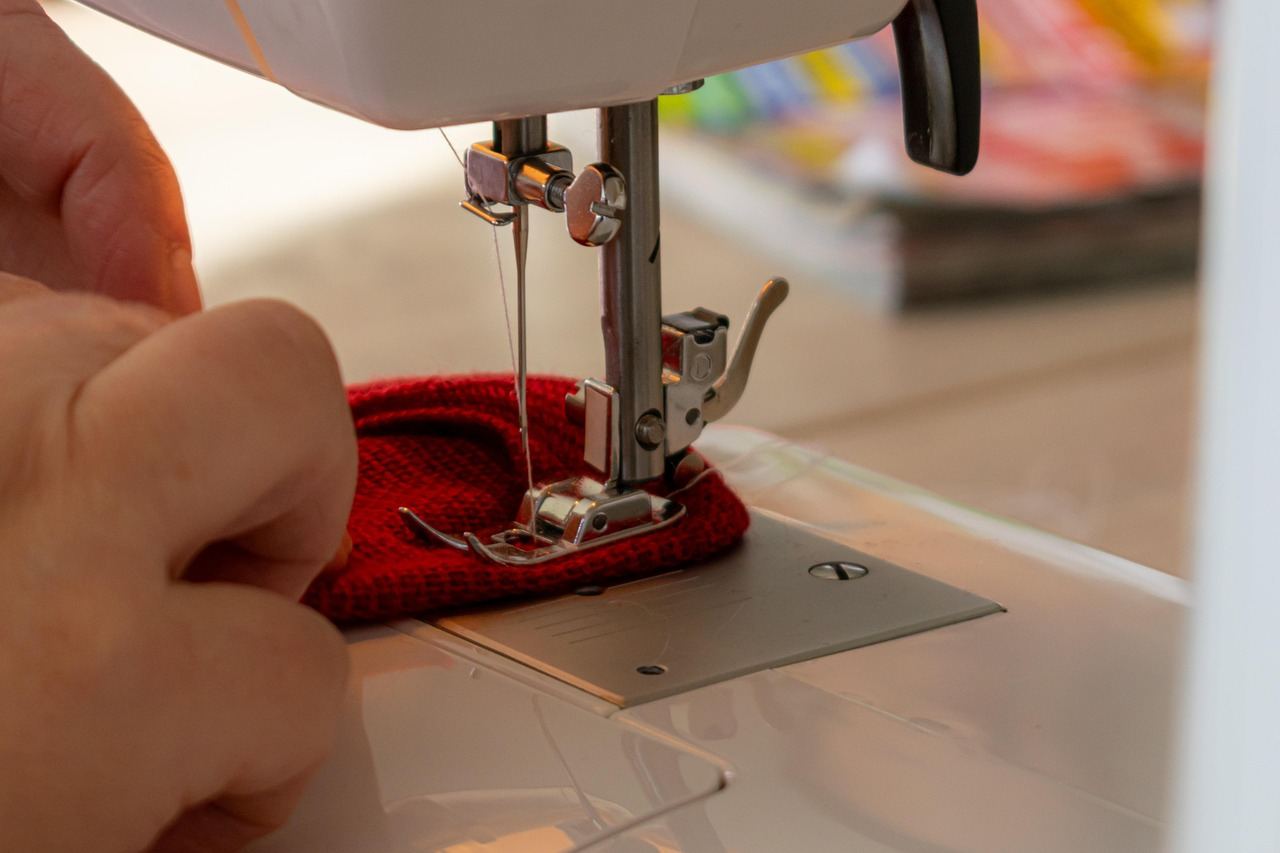
Simple sewing projects for beginners
Once you can thread a needle and sew a straight line, many more options open up. A basic running stitch by hand is enough for most of them.
Patches and visible mending
Cover a hole or stain with a scrap of contrasting fabric and stitch around the edge. Wonky stitches are part of the look, and bold patches are now a style choice rather than a flaw.
Jeans into a bag or pouch
Cut the legs off, sew the bottom closed, and use the waistband as the opening. Back pockets become handy compartments. A strip from the hem makes a strap.
Shirts into cushion covers
Cut two squares slightly larger than your cushion and sew three sides, right sides together. Turn them out, insert the cushion, and close the fourth side with a few stitches or buttons from the original shirt.
Sweaters into mittens or pouches
Felted wool does not unravel when cut. Use a mitten you already own as a template, cut two shapes per hand, and sew them together with a blanket stitch.
Quilted scrap projects
Saved offcuts can be sewn into a patchwork panel for a coaster, placemat or pot holder. Cut squares of the same size, join them in rows, then press the seams flat. Backing the panel with an old towel makes a pot holder that handles warm dishes.
Surface changes: dye, embroider, repurpose hardware
Sometimes the garment fits but looks dull or stained. Changing the surface is often enough.
- Dyeing: natural fibres take dye best. Follow the product’s instructions and test on a hidden area. Try removing stains before dyeing; darker dye may leave them visible.
- Embroidery: a small flower or line of stitches over a stain turns it into a feature.
- Buttons and zips: snip them off before binning a garment. A jar of spare buttons saves money on repairs.
- Fabric paint or stencils: good for plain tees and denim, but wash the item first.
Tools and materials worth having
You can start with almost nothing, but a small kit makes every project easier. Keep it in one box so you can begin whenever you have a spare hour.
- Sharp fabric scissors: dull blades chew fabric and make cuts ragged. Keep them for cloth only.
- Needles and strong thread: a mixed pack of hand-sewing needles and a few spools in neutral colours covers most jobs.
- Pins or clips: they hold layers still while you sew, which matters most with slippery fabric.
- Chalk or a washable pen: mark your cutting lines before you cut, never after.
- A ruler or tape measure: straight edges make a project look finished.
Most of the rest you already own: spare buttons, odd socks, old towels and worn sheets all make useful patches, padding or linings.
How to choose the right project for each garment
Look at what the garment does well. A shirt has a large flat panel, jeans have strong fabric and pockets, and a sweater has warm, thick knit. Match the project to that strength rather than fighting it.
Start small and build up. A cloth or headband teaches you to cut cleanly; a patch teaches you to stitch; a cushion cover teaches you to sew a seam and turn it out. Each step uses the skill from the last.
Also think about use. A bag that will carry heavy shopping needs denim or canvas and reinforced handles, while a decorative pouch can be made from almost anything.
Mistakes to avoid and when to let go
Choose a project to match the fabric. Slippery satin and thin knits are harder to sew, so save them for later.
Not everything is worth upcycling. Clean, heavily damaged or very thin fabric can become cleaning rags or go to a textile collection point that accepts it. For mouldy fabric, check local disposal guidance. Keep clothes you plan to rework in a dry, clean place; our guide on how to store clothes long term explains how to protect them from damp and moths.
Finally, don’t buy lots of new supplies for a first attempt. Use what you have, learn from the result, and then decide whether you enjoy it.
Frequently asked questions
Do I need a sewing machine to upcycle clothes?
Show answer
No. Many beginner projects need only scissors, and a needle and thread cover most others. A machine just makes long seams faster.
What is the easiest first project?
Show answer
A T-shirt tote bag or a set of cleaning cloths. Both use cut cotton and need no sewing.
Which fabrics are best for beginners?
Show answer
Cotton, denim and jersey are forgiving. Avoid slippery or very stretchy fabrics until you’re more confident.
Is upcycling better than donating?
Show answer
Not always. If a garment is still wearable, passing it on keeps it in use as it is. Upcycle items that are stained, damaged or no longer your style.