Fuzz balls on a favourite sweater are frustrating, but you can slow them down. To learn how to prevent clothes from pilling, cut friction: turn garments inside out, wash gently and skip the dryer.
This guide is part of our wider look at how to care for clothes.
| Item | Key fact |
|---|---|
| Main cause of pilling | Friction, mostly where clothes wear most |
| Before washing | Turn clothes inside out |
| Wash setting | Cold water, gentle cycle |
| Delicates and loose weaves | Skip the dryer |
| Fibre length | Longer fibres pill less than short ones |
Figures and advice can change, so check the sources before you rely on them: Speed Queen and Gentleman’s Gazette.
Why clothes pill in the first place
Pilling is a surface defect. Loose fibres push out from the cloth, and over time abrasion tangles them into small balls that stay anchored to the fabric.
Friction is the trigger, so pills usually show up where clothes rub most: underarms, sleeves, cuffs and sides. Washing and wearing both contribute.
Knowing this helps you choose what to change. You can’t remove friction completely, but you can reduce how much your clothes rub against each other, the washing drum and the dryer.
Pilling depends on both fabric construction and how a garment is washed, dried and worn.
Where pilling really starts: wear and washing
Pilling begins long before you see it. Each wear loosens a few surface fibres, and every wash gives them another chance to tangle.
Think about the points of contact in a normal week. A bag strap rubs a coat shoulder, a seatbelt rubs a jacket, and your arms rub the sides of a jumper all day.
- Wearing: repeated rubbing at underarms, cuffs, thighs and wherever a bag or belt sits.
- Washing: garments rubbing each other, plus zips, buttons and hooks snagging soft fabric.
- Drying: tumbling, which adds yet more contact between garments.
Once you see the three stages, the fixes are easy to place. Each one targets a single point where fibres get roughed up.
Choose fibres and fabrics that resist it
Fibre choice matters before you ever do laundry. Longer fibres pill less than short ones, because there are fewer loose ends and they take longer to work free of the weave.
Tighter twist helps too, since a higher twist makes denser, firmer yarn. Neither wool nor cotton is consistently resistant to pilling; the fabric’s construction also matters.
Blends are a common trouble spot. Weak fibres break and bundle up, while stronger synthetic fibres hold those pills on the surface, so blended fabrics are more likely to pill overall.
- Check labels for long-fibre or tightly spun yarns.
- Be wary of loose, soft knits for heavy daily wear.
- Expect wool pilling to ease as loose fibres break away.
- Feel the fabric in the shop: a firm, dense hand usually signals a tighter yarn.
Choosing a fabric that resists pilling can reduce the need to remove pills.
How to prevent clothes from pilling in the wash
Start by turning clothes inside out before washing. This protects the visible surface, though it doesn’t remove the friction itself.
- Zip up zippers and fasten buttons so they don’t snag other garments.
- Choose a gentle or delicate cycle with a slower spin, which limits agitation between garments.
- Use cold water.
- Keep heavy items such as denim apart from lighter, softer pieces.
- Leave room in the drum so clothes can move freely rather than being squeezed together.
Sorting by fabric weight is a habit worth building. A towel or a pair of jeans is a rough partner for a fine knit, and the knit pays the price.
Wool needs extra care; our guide on how to wash wool sweaters covers it in detail.
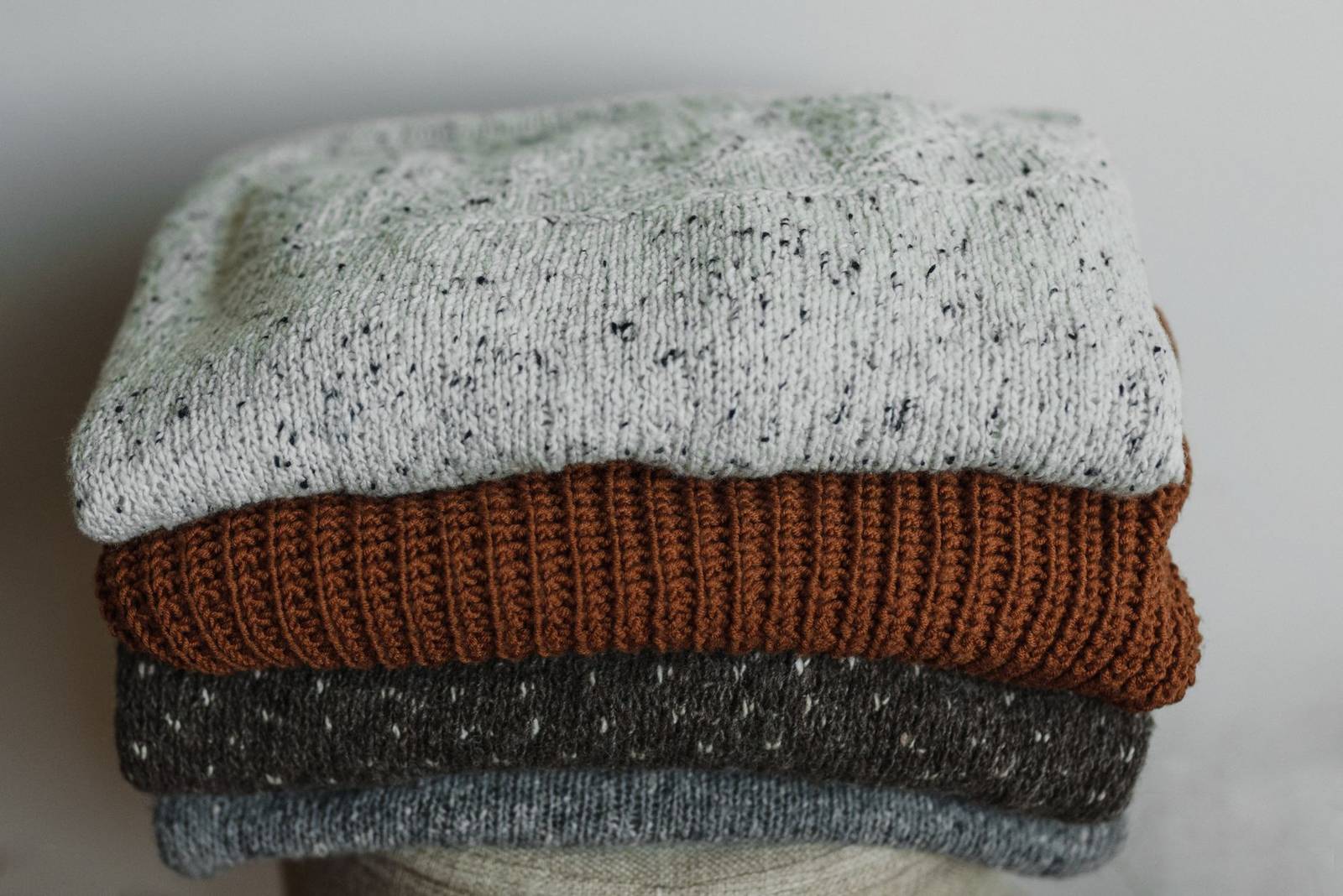
Drying and storing without damage
Skip the dryer for delicates and loosely woven clothes. Clothes rub together in a tumble dryer, encouraging pills to form.
Air-drying flat or on a rack is gentler on knits. Lay a sweater on a clean towel and reshape it, so it doesn’t stretch on a hanger.
Storage matters as well, because rubbing in a crowded drawer adds wear. Our notes on how to store clothes long term explain how to keep knits in good shape.
Everyday habits that reduce rubbing
Small choices while wearing clothes add up. Rotate your knits so no single sweater takes every day of friction, and give each a rest between wears.
- Carry bags on a different shoulder now and then, or hold them rather than wearing them over knitwear.
- Wear a smooth layer under a rough one, so fabrics don’t grind together.
- Keep hook-and-loop fasteners closed and away from soft knits.
- Wash less often when a garment is only lightly worn; airing it out is enough.
Fewer washes mean fewer chances for fibres to tangle. This is the simplest habit on the list, and it costs nothing.
Can pilling be fully stopped?
Realistically, no. As one laundry guide puts it, you cannot outright prevent pilling, so aim to slow it and keep it manageable.
If pills do appear, remove them gently with a fabric shaver or comb rather than pulling them off by hand, which can loosen more fibres. Then keep up the low-friction habits above.
Work in good light on a flat surface, and go slowly over each patch. Pulling hard or cutting close to the cloth can leave thin spots or holes, so use light strokes and stop once the surface looks even.
Expect some difference by fibre. Wool pills tend to fall away over time, while synthetic pills cling on and need regular removal.
A simple routine to follow each laundry day
Habits stick when they are short. Use this routine as a laundry checklist.
- Sort by fabric weight, so heavy items such as denim don’t wash with fine knits.
- Close zips and buttons, then turn each garment inside out.
- Choose cold water and a gentle cycle, and don’t cram the drum.
- Take clothes out promptly and reshape them while damp.
- Air-dry delicates and loosely woven pieces instead of tumbling them.
- Fold knits and give them space in the drawer.
Over a season, this routine means fewer pills to remove and less need to replace worn-looking clothes. That saves money and keeps garments in use for longer.
It also helps to check clothes as you sort. If you spot early fuzz on one sweater, treat it with extra care next time, rather than waiting until the whole surface has changed.
Frequently asked questions
Does washing inside out really help?
Show answer
It protects the outer surface of the fabric, so friction hits the inside instead. It reduces visible pilling but doesn’t eliminate friction.
Is the dryer bad for pilling?
Show answer
It can be. Tumbling creates additional friction between garments, so skip it for delicates and loosely woven clothes.
Which fabrics pill the least?
Show answer
Longer fibres and tightly twisted yarns pill less. Blends of weak and strong fibres tend to pill more.
Will wool stop pilling eventually?
Show answer
Wool pilling generally diminishes over time as loose fibres break away, while strong synthetic fibres hold pills in place.